Traditional Chinese Medicine has used acupressure for centuries to help the body stay balanced and resist illness. This article describes three points that are traditionally used to support the immune system, especially during cold and flu season, and how to find them yourself.
Please note: acupressure is a complementary practice and does not replace medical advice. If you feel unwell, have a high temperature or symptoms that are getting worse, contact your GP or NHS 111.
How to use acupressure
Use the pad of your thumb or finger to apply firm but comfortable pressure, or small circles, for one to two minutes on each side. Breathe slowly and relax while you press.
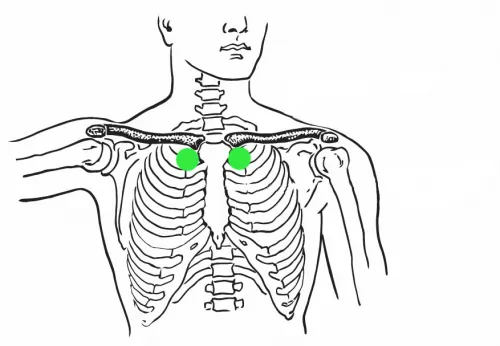
Kidney 27 (Shufu)
Where: in the hollow just below the collarbone, about two thumb-widths either side of the centre line of the chest.
Traditional use: Kidney 27 is traditionally used for chest and breathing problems, such as coughs and shortness of breath, and for tiredness. In TCM the Kidneys “grasp” the Qi of the Lungs, helping the breath reach deep into the body.
Lung 7 (Lieque)
Where: on the thumb side of the forearm, about two finger-widths above the wrist crease. To find it, interlace the thumbs and index fingers of both hands: the tip of the top index finger rests in a small groove above the wrist bone. That groove is Lung 7.
Traditional use: Lung 7 is one of the main points for coughs, sore throats and the early stages of a cold. It is also used for headaches and a stiff neck, and is said to strengthen the body’s defensive Qi.
Large Intestine 11 (Quchi)
Where: at the outer end of the elbow crease when the elbow is bent.
Traditional use: Large Intestine 11 is traditionally used to “clear heat”, so it is often included for fever and sore throats during colds and flu. It is also a key point for the elbow and arm, and is one of the elbow points that open in Tai Chi and Chi Kung when the elbows sink.
Looking after yourself
Acupressure works best alongside healthy habits: a balanced diet rich in fruit and vegetables, plenty of water, good sleep, regular exercise and ways of managing stress. Gentle movement practices such as Tai Chi and Chi Kung support all of these.
To explore Chinese medicine further, read Chi: understanding the vital life force, or book a Shiatsu session, which starts with a free 15-minute consultation.