The word Chi (also written Qi, or Ki in Japanese) is used often in martial arts and healing circles. It is usually translated as energy, vital force or life force: the unseen force that, in Chinese thought, flows through all living things and keeps them in balance. This article introduces the main ideas behind it.
Chi and the meridians
In Traditional Chinese Medicine (TCM), Chi flows through the body along pathways called meridians, each linked to an organ. Health depends on Chi flowing smoothly; blockages, excess or deficiency are seen as the roots of imbalance and illness. Shiatsu, acupressure, Tai Chi and Chi Kung all work with this flow.
Yin and Yang
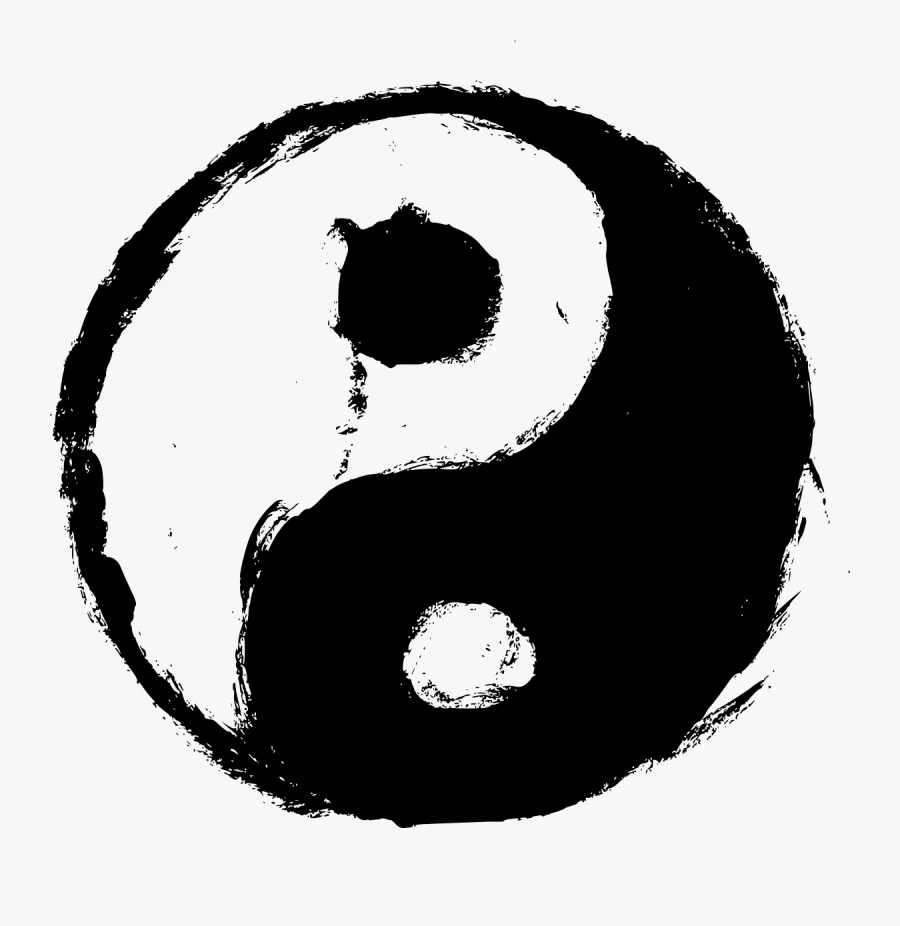
Chi always has two complementary sides, Yin and Yang. Yin is quiet, cool and inward; Yang is active, warm and outward. The familiar symbol shows each side containing a seed of the other, and neither is better than the other. As one grows, the other gives way, keeping the whole in balance. These ideas draw on very old Chinese thought, including the I Ching (Book of Changes), whose oldest parts date back nearly 3,000 years.
The Five Elements
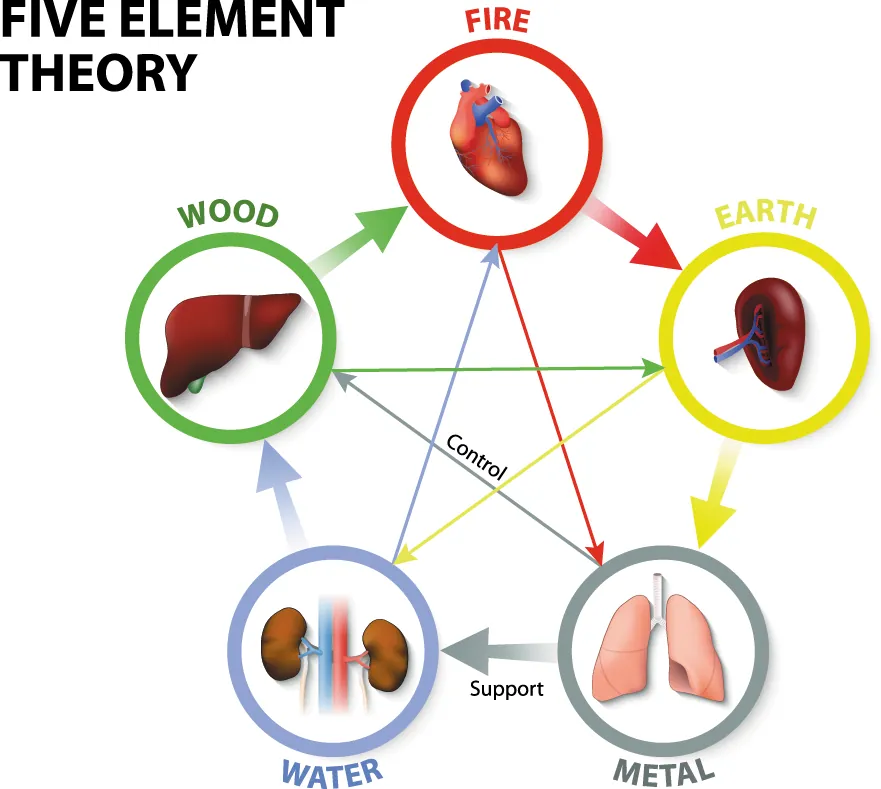
The theory of the Five Elements (Wu Xing) describes how Chi changes and moves through five phases: Wood, Fire, Earth, Metal and Water. The theory took shape more than 2,000 years ago and remains central to TCM. The elements relate to one another in two cycles:
- The supporting cycle - Wood feeds Fire, Fire creates Earth (ash), Earth bears Metal, Metal carries Water, and Water nourishes Wood.
- The controlling cycle - Wood parts Earth, Earth dams Water, Water puts out Fire, Fire melts Metal, and Metal cuts Wood.
Each element has a Yin and a Yang organ. Metal, for example, pairs the Lungs (Yin) with the Large Intestine (Yang). Their meridians form linked pathways of Yin and Yang energy circulating through the body.
The vital substances
TCM describes the body’s health through three linked systems:
- The vital substances - Qi (energy), Xue (blood), Jinye (body fluids), Jing (essence) and Shen (spirit).
- The Zang Fu - the Yin and Yang organs described above.
- The Jing Luo - the meridians that connect the organs and carry the vital substances.
Chi is said to have five main functions in the body:
- Moving - circulating blood and body fluids.
- Warming - keeping the body and limbs warm.
- Protecting - defending against outside influences such as colds.
- Holding - keeping fluids and organs in their proper place.
- Transforming - turning food and drink into energy and blood.
Cultivating Chi
In the martial arts, Chi is cultivated through practice. When a student performs a form or kata, or holds a Chi Kung posture with correct alignment, relaxed breathing and calm attention, they are said to cultivate Chi. Over time, a deeper study of the internal martial arts shows how this relaxed, connected strength can be used in self-defence.
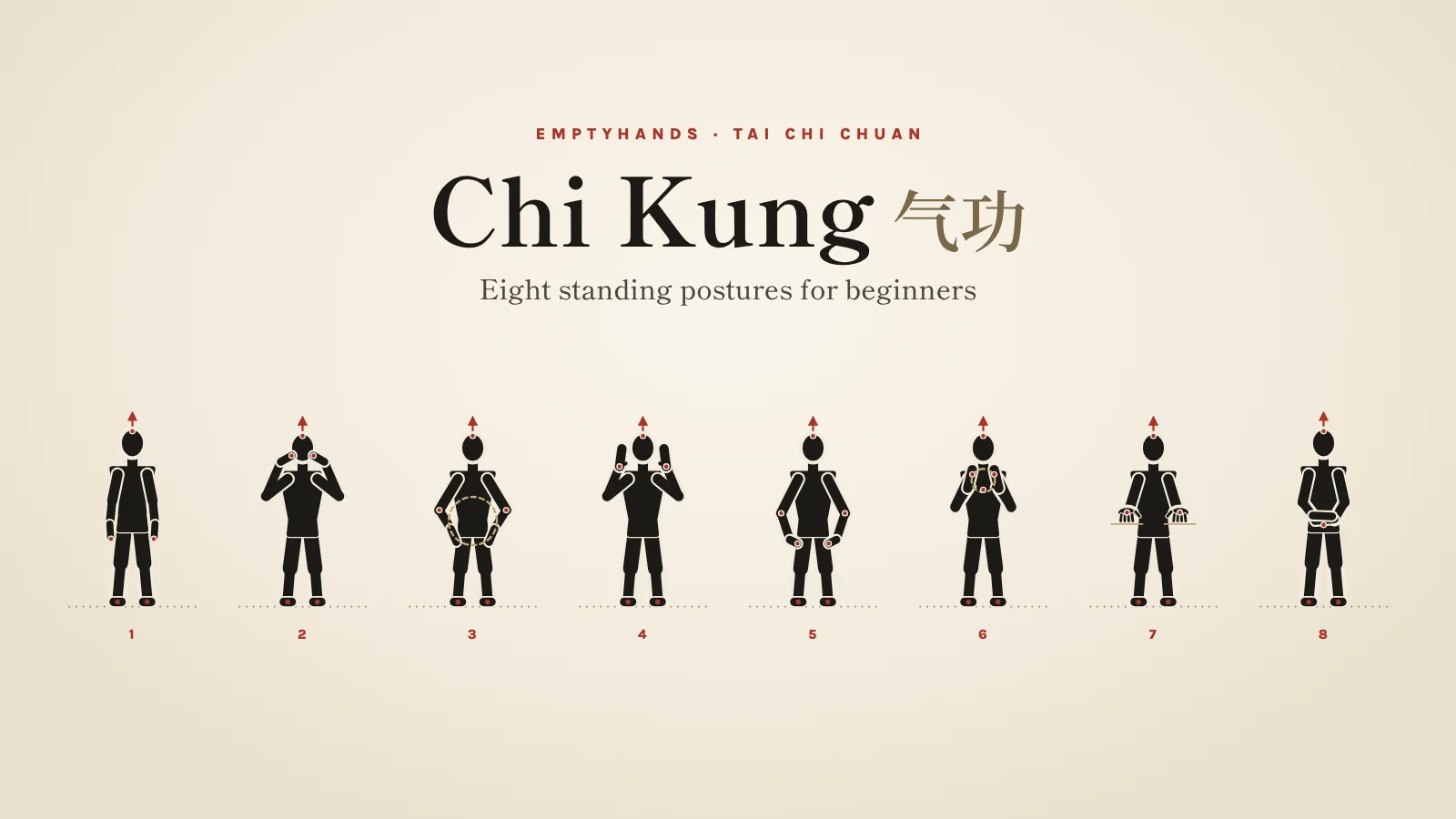
Try it for yourself with eight standing Chi Kung postures for beginners, or come to a Tai Chi class in Ilford.