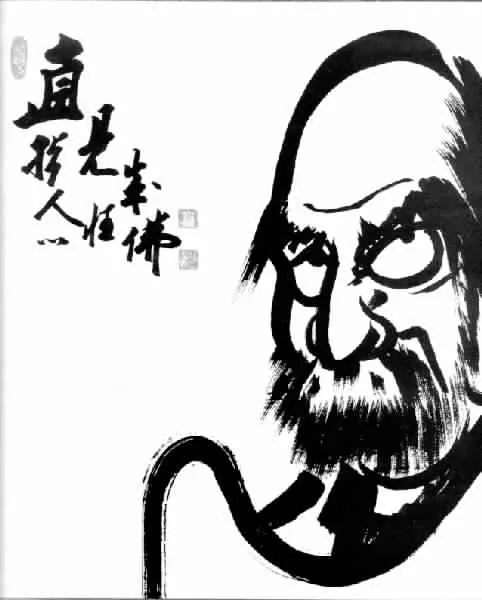
Bodhidharma was a Buddhist monk of the 5th or 6th century AD. He is remembered as the founder of Chan Buddhism, known in Japan as Zen, and in martial arts circles as the teacher who brought physical training to the Shaolin Monastery. His story mixes history and legend, but its message has inspired martial artists for centuries.
Early life
Tradition says Bodhidharma came from a royal family in southern India and gave up his title to follow a spiritual path. He studied under the Buddhist teacher Prajñātāra, who sent him to China to spread the teaching. Bodhidharma stressed direct experience and meditation over reliance on scriptures alone.
Journey to China
One famous story tells of his meeting with Emperor Wu of Liang, a devout Buddhist. The emperor asked how much merit he had earned by building temples and supporting monks. Bodhidharma replied: “No merit at all.” Good deeds done for the sake of reward, he explained, bring no true merit. The puzzled emperor let him go, and Bodhidharma travelled north.
He settled near the Shaolin Monastery on Mount Song. Legend says he meditated facing a cave wall for nine years.
Training the Shaolin monks
According to legend, Bodhidharma found the monks too weak to sit through long hours of meditation, so he taught them exercises to strengthen the body and calm the mind. These exercises are said to be the seed of Shaolin Kung Fu.
Historians point out that the link between Bodhidharma and fighting arts first appears in texts written many centuries after his death, so it is best understood as legend. Even so, the idea at its heart, that physical training and meditation support each other, is central to Zen and to the martial arts.
His influence on the martial arts
Zen thinking deeply shaped Japanese martial arts, including Karate, Judo, Kendo and Aikido. Ideas such as mushin (無心, “no mind”), the state of acting clearly and naturally without being caught up in thought, come from the Zen tradition that Bodhidharma founded. Read more in Karate mindsets.
Daruma in Japan
In Japan, Bodhidharma is known as Daruma. The round, red Daruma doll, which rights itself whenever it is knocked over, is a popular symbol of perseverance and good luck. People paint in one eye when they set a goal and the second when they achieve it.
Why his story still matters
Whether history or legend, Bodhidharma’s story reminds martial artists that training is about more than fighting. Strength, discipline, patience and a clear mind are developed together, on the mat and off it. Read more about the history of Karate-Dō.