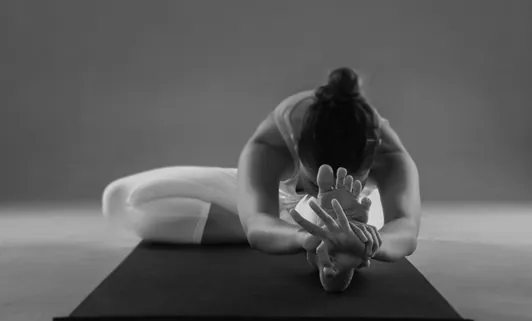
Yoga and Karate may look very different, but they share a great deal. Both join breath, posture and focus, and both aim for a calm, balanced mind. This article looks at how the two practices complement each other.
Prana and Chi
In Karate and the Chinese arts we often talk about Chi (Qi), the life force that moves through the body along the meridians. Yoga has a similar idea: prana, the life force that flows through channels called nadis. Both traditions teach that when this energy flows freely, body and mind are healthy and at ease.
A shared history
Tradition tells of the Indian monk Bodhidharma, who travelled to China and taught the Shaolin monks exercises to strengthen the body for long hours of meditation. Whatever the history behind the legend, it reflects a real connection: in both Yoga and the martial arts, physical training is a path to a calmer, clearer mind. Yoga’s principle of ahimsa, non-violence, also finds an echo in Karate, the “empty hand” that seeks to avoid conflict.
The importance of breath
The breathing practices of Yoga are called pranayama. Notice how your breath changes when you face a difficult situation: it becomes short and heavy, compared with the slow, relaxed breath of a calm day. Pranayama trains us to slow and lengthen the breath, which in turn calms the mind.
Yoga teaches that the body must first be strong and steady in its postures (asana) before it can hold the breath well. Karate works in the same way, building the body through stances and kata and developing strength in the hara, the body’s centre below the navel.
Similar practices
- Meditation - Karate classes begin and end with mokuso, focused breathing while kneeling in seiza. A Yoga session often starts seated in sukhasana, eyes closed, settling into the present moment.
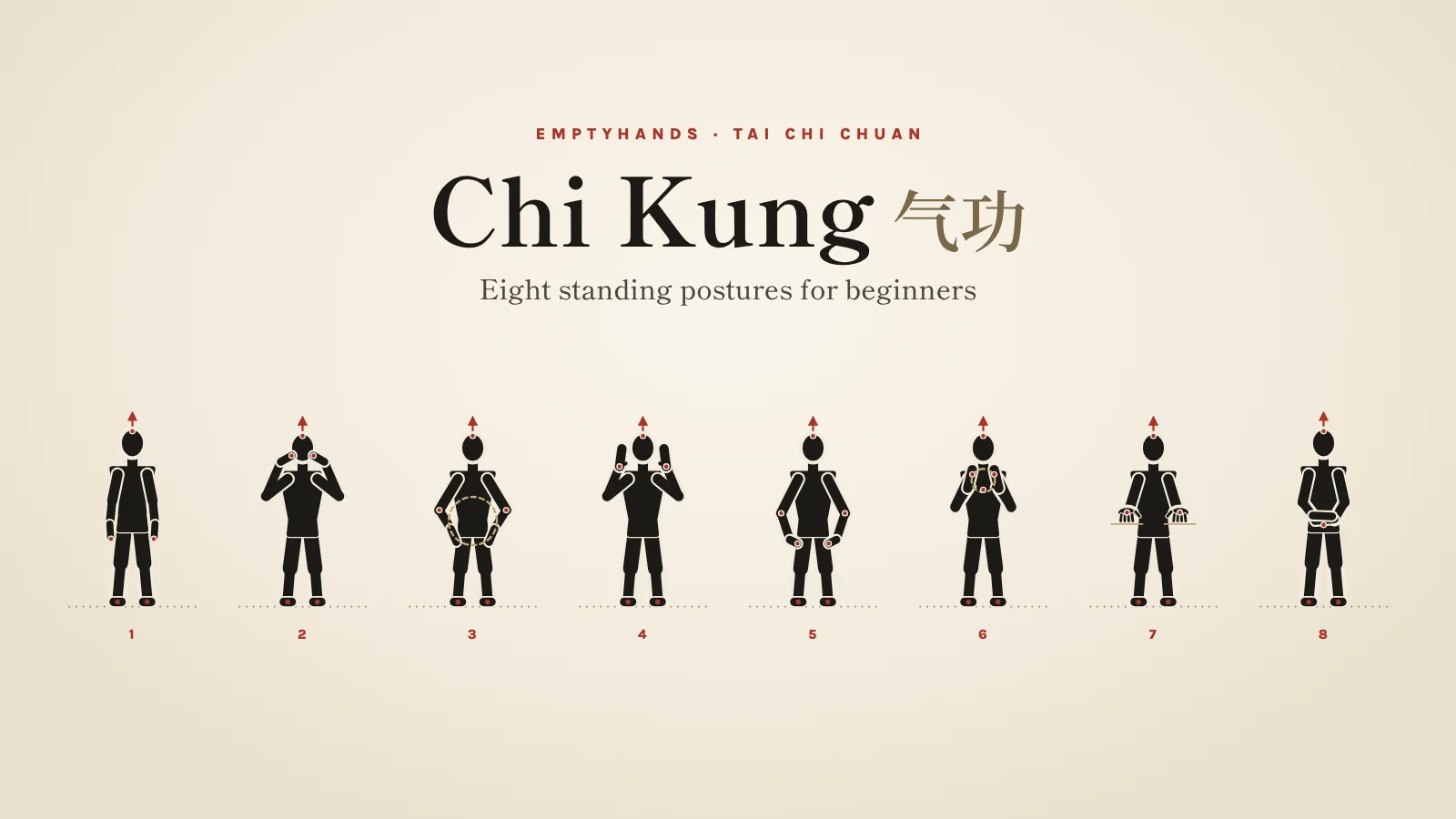
- Standing still - Tadasana (mountain pose) teaches grounding and weight distribution. It is close to the natural stance of Karate and to Wu Chi in Tai Chi, where weight rests on the balls of the feet over the Bubbling Spring point (KI1).
- Rising arms - Tiryaka tadasana (swaying palm tree pose) stretches the arms and sides much like the rising block, age uke, found in the Heian kata.
- Square hips - three-legged downward dog (tri pada adho mukha svanasana) lengthens the spine and opens the hips, and teaches the square hips a karateka needs for balance.
- Kicking line - virabhadrasana III (warrior 3), with the arms forward and one leg pushing back, mirrors the line of a back kick, ushiro geri.
- Sequences - the Sun Salutation (surya namaskar) is a series of movements repeated in order, just like a kata. In both, the breath leads the movement.
One aim
Both practices build balance, strength and flexibility, help energy flow freely, and lead towards calm, confidence and fluid movement. Above all, both train the mind. As the Buddha taught, the path to peace lies in mental discipline.
Drop-in Yoga classes run every Thursday from 8pm to 9pm in Ilford. Read more about Yoga at EmptyHands.