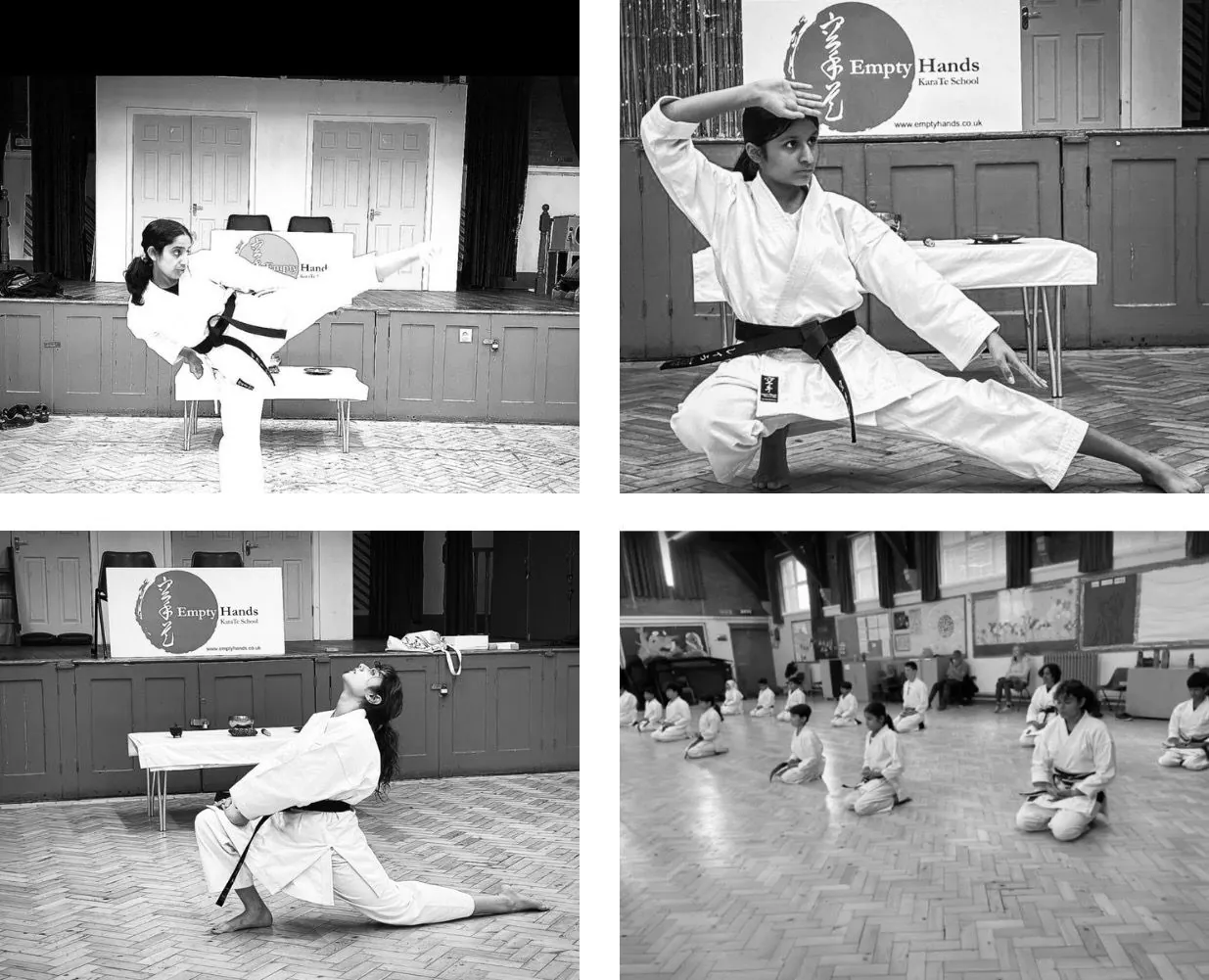
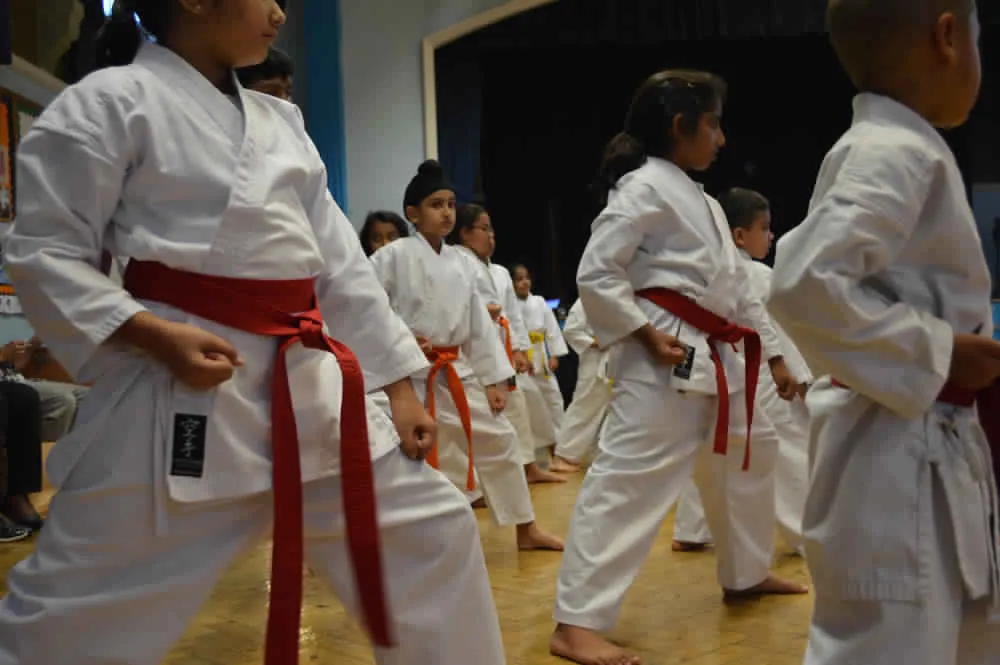
Ask people why they start Karate and most will say fitness or self-defence. Ask them why they stay, and the answer is usually different: it is the person Karate helps them become. At EmptyHands we follow the classical Shotokan system, and every class ends with the Dojo Kun - five precepts that carry the heart of the art.
The five Dojo Kun
The Dojo Kun were handed down by the masters of Shotokan as a guide for training and for life. Students recite them together at the end of every lesson. Each one begins with hitotsu - “one” - because each is as important as the others.
1. To strive for the perfection of character
一、人格完成に努むること · Hitotsu, jinkaku kansei ni tsutomuru koto
This is the first and most important aim of Karate. Perfection is never reached, but striving towards it - being a little more patient, honest and kind each week - is the real training. Kicks and punches are the tools; character is the goal.
2. To defend the path of truth
一、誠の道を守ること · Hitotsu, makoto no michi o mamoru koto
Be sincere, with others and with yourself. In the dojo that means training honestly: admitting what you can’t do yet, and never pretending a technique is better than it is. Outside the dojo it means standing up for what is right, even when it is difficult.
3. To foster the spirit of effort
一、努力の精神を養うこと · Hitotsu, doryoku no seishin o yashinau koto
Progress in Karate comes from steady, patient effort - the same stance practised a thousand times, the same kata polished year after year. Students learn that hard work, more than talent, carries them from white belt to black belt, and that lesson goes with them into school, exams and work.
4. To honour the principles of etiquette
一、礼儀を重んずること · Hitotsu, reigi o omonzuru koto
Karate begins and ends with a bow. Respect for the Sensei, for training partners and for the dojo itself makes it a safe place to learn. Good manners become a habit, and courtesy is often the first change parents notice in their children.
5. To guard against impetuous courage
一、血気の勇を戒むること · Hitotsu, kekki no yū o imashimuru koto
Real strength includes self-control. Karate teaches students to stay calm, think before they act and walk away from trouble whenever they can. The aim is never to look for a fight, but to have the composure to avoid one.
How Karate builds confidence
Confidence grows in the dojo one small step at a time. A nervous beginner learns a first stance, then a first kata, and one day stands in front of the class at a grading to show what they can do. Every new belt is proof that effort pays off.
Because everyone is taught to respect their training partners, the dojo is a safe place to make mistakes and try again. Shy children start to speak up, look people in the eye and lead the warm-up for younger students. Adults find a calm self-assurance that comes from knowing their body and mind are stronger than they were.
Knowing how to look after yourself brings a quiet confidence too - not a need to prove anything, but the security of knowing you could protect yourself if you ever had to.
How Karate builds discipline
Discipline in Karate is learned, not imposed. Students arrive on time, line up by grade, bow in and listen when the Sensei speaks. Week by week, these small routines become habits.
Kihon teaches patience: the same punch or block repeated until it is right, and then repeated again. Kata asks for concentration from the first movement to the last. Gradings give students a goal and a date to work towards, so they learn to practise between lessons rather than waiting to be told.
Parents often tell us that this self-discipline shows up at home and at school - in homework done without an argument, in better concentration and in a calmer response to setbacks.
How Karate teaches respect
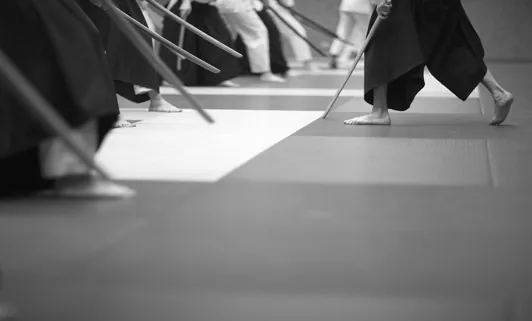
Respect runs through every part of a Karate class. Students bow as they enter and leave the dojo, before and after working with a partner, and to the Sensei at the start and end of every lesson. The bow is a reminder that everyone in the room is there to learn, and that each partner trusts the other with their safety.
Control is respect in action: in kumite, techniques are delivered with full spirit but stopped before they can hurt a partner. Senior students help beginners, and beginners learn from those who once stood where they stand. Children learn to respect adults, and adults learn just as much from the enthusiasm of children.
Respect also turns inwards - looking after your body, keeping your word and living by the Dojo Kun outside the dojo as well as inside it.
More benefits of Shotokan Karate
- Fitness at any age - strength, flexibility, balance and stamina, built through kihon, kata and partner work at a pace that suits each student.
- Focus and memory - learning long kata sequences sharpens memory and concentration.
- Practical self-defence - bunkai (the application of kata) and controlled kumite teach timing, distance and awareness.
- A calmer mind - breathing, a moment of mokuso (meditation) and the rhythm of training help to ease everyday stress. Research suggests martial arts can benefit mental well-being too.
- Friendship and community - children and adults from every background train side by side, and senior students mentor those just starting out.
Start your own journey
Karate classes run every Thursday from 7pm to 9pm at St Andrew’s Church Hall, The Drive, Ilford IG1 3PE, for children from 4 and adults of any age. New starters pay as they go at £10 a lesson, and all you need is comfortable clothes. Book a trial class, or read more about Karate classes in Ilford.